Probably Stolen storage bays guide
By the Probably Stolen Wiki editors
Updated
Probably Stolen storage bays work as shop containers, with standard bays holding items and smuggler bays concealing goods from seizure during inspections. The standard Storage Bay has a 3 × 3 grid, and the Probably Stolen Game Wiki fan site lists an Expansion Kit that adds two tabs, up to five total. These are the key distinctions in this guide.

How the storage bays guide separates container types
Probably Stolen storage bays include general and specialist containers, with each type serving a stated purpose. A standard Storage Bay is a legal item with a 3 × 3 grid for storage. A fan site groups the types as general stock, chemicals and lab supplies, and contraband or hidden goods.
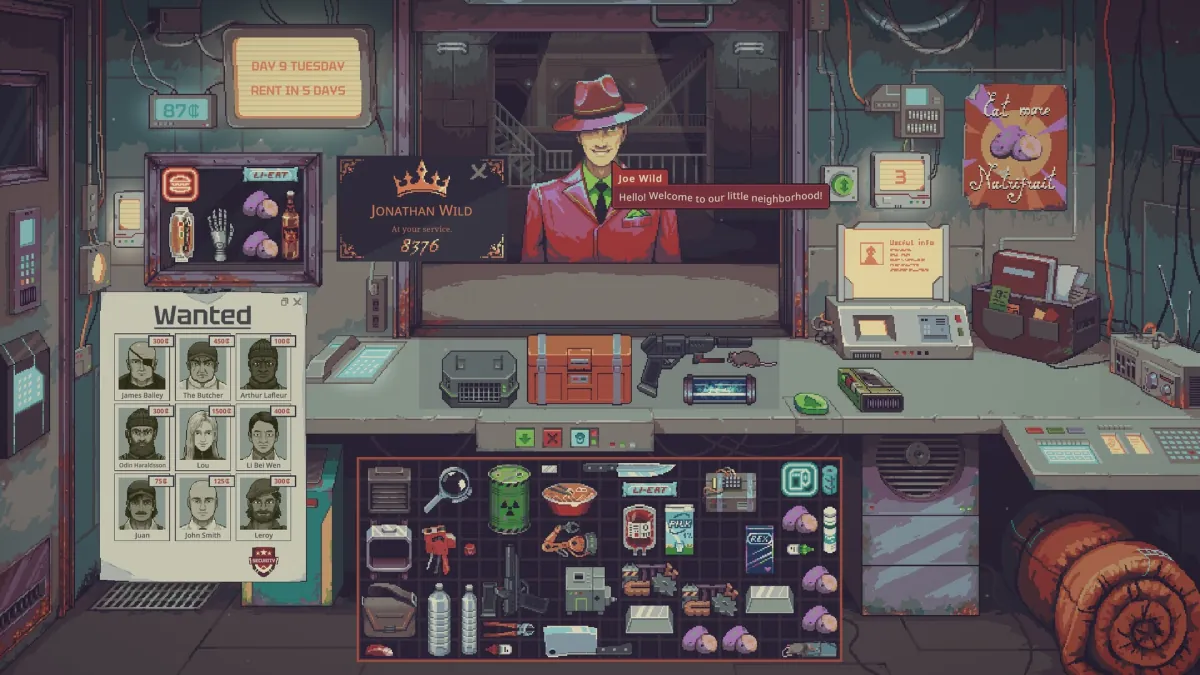
The game is described as a shopkeeping simulator set on a dystopian space station. That setting gives storage a practical role in the shop: the cited inventory guide groups containers by the goods they hold, while the standard bay offers a grid for items. For a broader look at item categories, see Types of Items and Items. Those pages are related references for inventory topics, while this guide focuses on the storage distinctions stated here.
A separate inventory page describes Storage Bays as shop containers for keeping items, with some types made for machines or specialist goods. The available description supports the broad distinction between general-purpose and specialist containers, but it does not name additional machine bay models or provide a list of compatible goods. Keep the type descriptions in view when deciding what a storage label means: general stock, chemicals and lab supplies, or concealed contraband.
How storage bays works: grid space and expansion tabs
A standard Storage Bay stores items in a 3 × 3 grid with nine cells. The storage guide says item footprints use grid cells, so capacity depends on the shapes and sizes of the items. Nine cells describe the grid, not a guaranteed count of separate items; the cited details tie capacity to footprints rather than to a fixed object count.
The Storage Bay Expansion Kit adds two storage tabs to a Storage Bay, up to five tabs total. That gives the documented expansion a clear limit: the kit adds tabs, and the maximum stated total is five. The item page does not describe a different grid size for expanded storage, so the supported comparison is about tabs rather than a changed cell layout. For related equipment pages, see Machines and Chemistry.
The table gathers the numerical storage details into one reference: the standard grid’s dimensions and cell count, plus the Expansion Kit’s two added tabs and the five-tab maximum. The final row groups the three described storage purposes, rather than claiming that every purpose has the same physical layout. Treat the nine-cell figure as the standard bay’s grid specification and the tab figures as the expansion specification.
| Entries | How it is counted |
|---|---|
| Standard grid: 3 × 3 | Grid dimensions |
| Standard grid: 9 cells | Cells in the grid |
| Expansion Kit: 2 tabs | Tabs added |
| Expanded total: 5 tabs | Maximum total stated |
| Specialist group: 3 types | General stock, chemicals and lab supplies, contraband and hidden goods |
What smuggler bays conceal during inspections
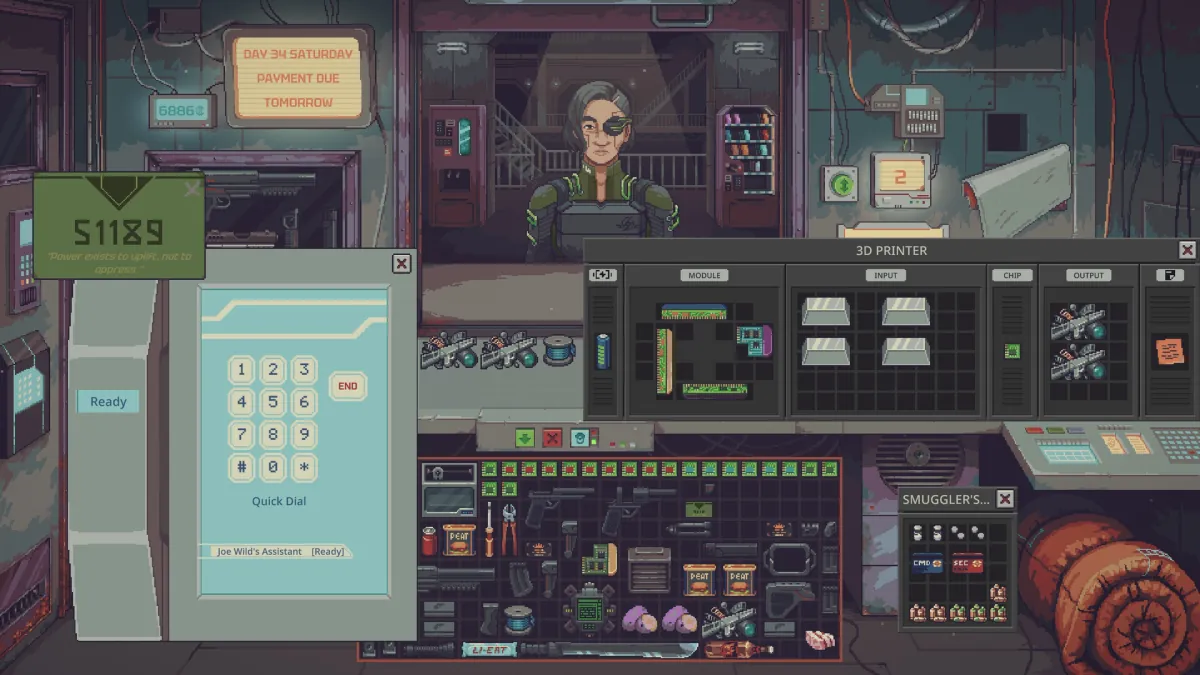
Smuggler bays conceal their contents from seizure during inspections. The concealment guide says using one forfeits the clean-record Security reputation bonus if goods are concealed during a sweep. That condition matters: the stated consequence is tied to goods being concealed during a sweep, not merely to owning a bay or using ordinary storage.
Ordinary storage, machine inventories, and counters do not conceal items just because they look like smuggler bays. The visible appearance of a container or counter is not enough to establish concealment; the cited guide distinguishes those ordinary places from the smuggler bay’s stated function. This is the key practical rule when sorting storage descriptions: concealment belongs to the smuggler bay, while ordinary storage remains ordinary storage in the inspection detail provided.
The Hypertech Storage Bay cannot be placed inside a Smuggler Bay, according to a contraband guide on a fan site. That rule is a specific placement restriction between two named bay types. It does not supply broader placement instructions or establish how other containers interact, so keep the statement limited to this pairing. For adjacent security topics, browse Security and Evidence and Stolen Goods.
How do Probably Stolen storage bays differ?
Probably Stolen storage bays have distinct functions: ordinary grid storage, added tabs, specialist storage, and concealment during inspections. The standard bay’s nine cells give a concrete capacity format, while the Expansion Kit changes the stated tab total. The smuggler bay has a separate security effect, so it should not be treated as another name for a regular storage container.
The game’s shopkeeping premise makes those distinctions useful for reading the available inventory descriptions. Probably Stolen is a shopkeeping simulator set on a dystopian space station, and its Steam store page lists the release date as 28 Oct, 2026. The same page names Questing Goose Studio as developer and tinyBuild as publisher. Those details place the storage system in the game’s stated setting without adding extra claims about how a player operates each container.
For a player comparing container types, the most reliable mental model is to keep the descriptions separate. Standard Storage Bays hold items on a 3 × 3 grid; the Expansion Kit adds two tabs up to five; specialist types are described for chemicals, lab supplies, machines, or contraband; and a Smuggler’s Bay conceals goods from inspection. The inspection consequence applies when goods are concealed during a sweep, so that detail belongs with the smuggler bay rather than general storage.
The interpretation keeps the limits of the descriptions visible. A grid and tab count explain storage structure, while the concealment guide explains a security consequence. Neither detail establishes a universal rule for every item or container. For more inventory context, Storage and Inventory is a related site page, and the categories in this guide can help you connect that broader topic to storage without treating all bays as interchangeable.
Gallery
Frequently asked questions
How many cells are in a Probably Stolen storage bay?
A standard Storage Bay has nine cells arranged in a 3 × 3 grid. Item footprints use grid cells, so capacity depends on the shapes and sizes of the items stored.
How many tabs can Probably Stolen storage bays have?
A Storage Bay Expansion Kit adds two storage tabs, up to five tabs total. The stated expansion detail concerns tabs and does not specify a different grid size.
Do storage bays hide goods during inspections?
Smuggler bays conceal their contents from seizure during inspections. Ordinary storage, machine inventories, and counters do not conceal items just because they look like smuggler bays.
What happens if I use a Smuggler’s Bay?
Using a smuggler bay forfeits the clean-record Security reputation bonus if goods are concealed during a sweep. The stated condition concerns concealed goods during a sweep.
How do I unlock Probably Stolen storage bays?
Unlock conditions are not confirmed in the details covered here. The described storage information explains bay types, grid space, expansion tabs, and concealment during inspections.
Can a Hypertech Storage Bay go inside a Smuggler Bay?
No. A contraband guide on a fan site states that the Hypertech Storage Bay cannot be placed inside a Smuggler Bay; Probably Stolen storage bays also include ordinary and specialist storage types.
Sources
- Save 10% on Probably Stolen - Cyberpunk Shopkeeper Sim on Steam
- Concealing goods · Probably Stolen Wiki
- Probably Stolen Contraband, Inspections & Raids
- Storage Bay – Value & Where to Find | Probably Stolen
- Probably Stolen Storage and Inventory Guide | Probably Stolen Wiki
- Probably Stolen Backpacks and Storage
- Probably Stolen Wanted List, Inspections and Fines