Probably Stolen display case guide
Updated
The display case attracts buyers interested in the product categories shown inside, so stock it before opening to shape who visits your shop. The Probably Stolen shop layout wiki places the cabinet to the left of the roller shutter door and says new displays added after business hours take effect the next day. The Probably Stolen display case is one part of the Probably Stolen shop layout: display cabinets draw buyers, while category signs draw sellers who offer those categories. The details below explain where to put items in the store and what stocking the case can change.
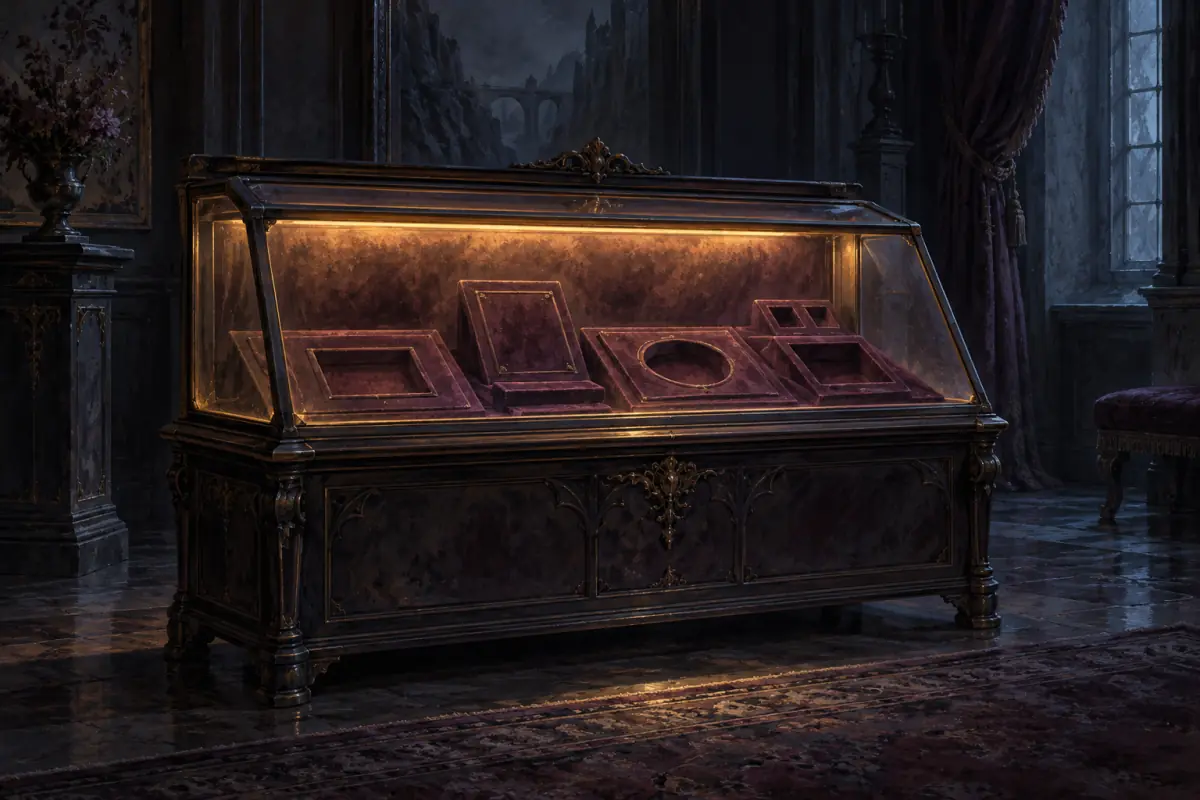
How to Place Items in the Probably Stolen Display Case
The display cabinet sits on the left side of the roller shutter door, and it should be stocked before the shop opens. The shop layout guidance says displays added after business hours take effect the following day, so a late change is for tomorrow’s customers rather than the current business day. Plan the arrangement before opening when you want displayed goods to influence the next day’s visits. The Probably Stolen shop layout wiki describes both the cabinet’s location and this timing.
To set up the case, place the items you want to display in the cabinet before opening, then consider which categories those items represent. The showcase guidance says displayed categories attract buyers, and the categories compete for buyer slots according to their total displayed value. Each category selected for a buyer slot gets one buyer, so the total value on display matters when deciding where to put items in the store. The Probably Stolen showcase wiki explains how category value factors into buyer selection.
A practical setup follows the timing and category rules in order. First, stock the cabinet while the store is closed; next, check which product categories are represented; then open the shop with the display already arranged. If you add or change a display after business hours, treat that as preparation for the next day. This routine follows the stated placement and timing guidance without assuming that a particular item guarantees a particular sales result.
- The display cabinet sits on the left side of the roller shutter door.
- Stock it before opening if you want the display to affect the coming business day.
- Choose displayed goods with their product categories and total displayed value in mind.
What the Probably Stolen Display Case Changes
The display cabinet attracts buyers for the product categories shown inside, while category signs attract sellers who offer those categories. That makes displays and signs serve different roles in the Probably Stolen shop layout: displayed goods target buyer interest, and signs bring sellers carrying matching categories. The showcase entry describes this distinction directly. The Probably Stolen showcase wiki covers both buyer attraction and seller signs.
Displayed categories compete with one another for buyer slots based on their total displayed value. Each category selected in that competition is assigned one buyer, so filling the case with several categories does not mean each one automatically receives the same number of buyers. The store’s appeal and dirtiness also affect whether buyers for the display cabinet are arranged at all. Those conditions make the case part of a broader shop setup: its category mix matters, while the shop’s condition affects whether the expected buyer arrangement happens.
Expanding the cabinet increases display space and the buyers attracted by displayed goods. The shop layout entry describes the upgrade as adding room for displays and increasing the buyers drawn by those goods. That gives expansion a direct connection to the case’s role: more display space lets the cabinet hold more displayed goods, and the stated effect is more attracted buyers. The Probably Stolen shop layout wiki includes the expansion effect.
AllThings.How's display case guide says a neon sign placed in the case draws sellers rather than buyers, which fits the split above: goods in the cabinet draw buyers for their categories, while special items like neon signs draw sellers. Keep that seller effect separate from the cabinet's category-based buyer effect when planning the layout. AllThings.How's display case guide covers the neon sign rule.
| Displayed content | Who it attracts | How to use it |
|---|---|---|
| Regular sellable products | Buyers who want that category of goods | Display food to sell food; the total displayed value also shapes buyers' budgets and class |
| Water Neon Sign and category signs (food, medical, materials, etc.) | Sellers offering the matching category | Suited to restocking; set aside acquisition funds and storage space first |
| Firearm license | Customers buying guns | Verify licensing conditions too; a display cannot replace a valid license |
| Appraisal Board Junior Certificate | Customers who need appraisal services | Prepare the matching guides and appraisal tools |
| Scavenger's Token | Scavengers | Each token in the cabinet raises their visit chance; the exact odds are not stated in writing |
| Black Lamp | Thieves who know the store buys stolen goods | Used to reach stolen-goods sellers; response depends on black-market reputation |
| Expedition recruitment board | New and existing staff preparing for expeditions | Use it when it is available in your version and progression |
Signs, Appraisals, and Customer Chances
Seller signs and appraisal checks share one customer queue, according to players on Steam. One player notes that too many seller signs make an appraisal customer less likely to come. In another thread, a player says that when neon signs take every random customer slot, no appraisal request can appear. The Steam discussion on the appraisal queue and the Steam discussion on inspect events give these reports.
A player reports that the display case rolls signs in the order they appear on the glowing yellow panel, with the appraisal sign usually rolling last. The same thread gives a daily 33% chance of an appraisal customer while the appraisal certificate sits in the display window; another player found the missing visits came from the certificate not being in the window. These are player reports about customer chances, so use them as guidance for arranging signs rather than a guarantee that an appraisal customer will arrive on a particular day. The Steam discussion on inspect events describes the reported percentage and sign order.
Players disagree about how firm display customers are. In one thread, a player expected a 100% chance of an appraisal customer with the certificate in the Probably Stolen display case, got none in a test day, and others replied that RNG is not a guarantee. On the other side, a Steam reply says each Showcase Expansion upgrade brings one customer per day looking for whatever is in the case, and AllThings.How quotes the upgrade's in-game text as one more customer per day. The Steam discussion on appraisal customers covers the guarantee debate, the Steam discussion on Showcase Expansion describes the upgrade, and AllThings.How's display case guide quotes its text.
A player reports that a demand product event can bring multiple guaranteed water buyers, and that higher store attractiveness brings water customers with more credits. The same thread says a single high-quality 6 L can in the display window is enough for top-level clients. Treat these details as one player's experience rather than a universal result. The Steam discussion on water customers gives that account.
A player in the inspect-events thread says only the poorest residents sell their food stamps, and that poor residents visit less as the store grows, so food stamp sellers appear less often. That observation concerns who visits over time, so it is useful context when weighing signs and displays alongside the reported appraisal chance. The Steam discussion on inspect events describes the reported pattern.
Contraband and Store Presentation
The showcase wiki says the mentor's notes warn that contraband in the cabinet leads to arrest, and its inspection dialogue has a branch for a full inspection after suspicious items appear in the cabinet. AllThings.How says the same thing: contraband in the case gets you arrested. Check the cabinet before opening and remove contraband to avoid that risk. The Probably Stolen showcase wiki covers the mentor's warning and the inspection branch, and AllThings.How's display case guide repeats the arrest warning.
Store condition matters alongside the products shown in the cabinet. The showcase guidance says the store’s appeal and dirtiness affect whether display cabinet buyers are arranged, so stocking the case alone does not settle whether those buyers appear. A useful setup check is therefore to review the displayed categories and the shop’s condition before opening. This keeps the case’s role clear: it presents categories to buyers, while appeal and dirtiness influence whether the buyer arrangement happens. The Probably Stolen showcase wiki states these conditions.
Our take on the Display Case
The Probably Stolen display case is best understood as a buyer targeting tool with a schedule. The clearest practical points are its location beside the roller shutter door, the need to set it up before opening, and the next day timing for new displays added after business hours. Once those basics are in place, category mix and total displayed value help explain why one arrangement may draw buyers for some categories rather than others.
The case also sits within a larger customer system. Signs attract sellers, and players report that signs share a queue with appraisal checks; the case’s buyer effect is distinct from that seller role. Shop appeal and dirtiness affect whether display buyers are arranged, and contraband in the cabinet carries the arrest risk the mentor warns about. Taken together, these points make a pre opening check useful: confirm the location, displayed categories, shop condition, and that no contraband remains on display. The Probably Stolen display case works best as one considered part of the Probably Stolen shop layout.
Frequently asked questions
Where should I put items in the store in Probably Stolen?
Put displayed items in the cabinet on the left side of the roller shutter door, and stock it before opening. The cabinet attracts buyers interested in displayed categories, while category signs attract sellers offering those categories.
When should I stock the Probably Stolen display case?
Stock the case before opening if you want the display ready for that business day. Displays added after business hours take effect the next day, according to the shop layout guidance.
How does the Probably Stolen display case choose which categories get buyers?
Displayed categories compete for buyer slots according to their total displayed value, and each selected category receives one buyer. The store’s appeal and dirtiness also affect whether display cabinet buyers are arranged.
Do signs affect appraisal customers in Probably Stolen?
Players say seller signs use the same customer queue as appraisal checks, so too many signs can make an appraisal customer less likely. A player also reports a daily 33% chance of an appraisal customer while the certificate sits in the display window.
Can contraband go in the Probably Stolen display case?
Leaving contraband in the cabinet leads to arrest, according to the mentor's warning. Check the Probably Stolen display case before opening and remove contraband to avoid that risk.
What does the Showcase Expansion upgrade do?
Players report that Showcase Expansion brings one customer per day looking for whatever is in the display case. The shop layout guidance also says expanding the display cabinet increases display space and the buyers attracted by displayed goods.
Sources
- Shop layout · Probably Stolen Wiki
- Showcase · Probably Stolen Wiki
- Appraisal, where are you ? :: Probably Stolen General Discussions
- Can you get multiple guaranteed water buyers each day? :: Probably Stolen General Discussions
- Do inspect events go away after a bit? :: Probably Stolen General Discussions
- Probably Stolen: How to Use the Display Case and Neon Signs (AllThings.How)